
Playful Ways to Teach Your Cat Simple Tricks
Imagine the delight of watching your whiskered companion respond to a hand signal with a graceful spin or a friendly high‑five. Teaching cats tricks isn’t just about showing off; it deepens the bond, provides mental stimulation, and adds a splash of fun to everyday life. In this guide we’ll explore Cat Training Tricks that are easy to teach, rewarding for both you and your feline friend, and rooted in positive, stress‑free learning. Whether you’re a seasoned cat owner or just starting out, these playful methods will turn training sessions into a cherished routine.
Understanding Your Cat’s Motivation
Every cat is an individual, and the key to successful training lies in discovering what truly motivates yours. While some cats chase laser dots with gusto, others are more food‑driven, and a few prefer gentle petting or a favorite toy. Observing these preferences will help you choose the right reward system and keep sessions enjoyable.
- Food rewards: Small, soft treats work well for quick reinforcement.
- Toy rewards: A feather wand or crinkly mouse can be a great incentive for active hunters.
- Affection rewards: Soft strokes or a brief cuddle can motivate cats who crave human contact.
Remember, the goal is to associate the trick with a positive experience, not to pressure your cat. Short, upbeat sessions of 5‑10 minutes keep the energy high and the learning curve gentle.
Setting the Stage for Success
Before diving into specific tricks, create a training environment that encourages focus and comfort. Here are the essential steps to set the stage:
- Choose a quiet space: A low‑traffic room with minimal distractions helps your cat concentrate.
- Gather your tools: Have treats, a clicker (optional), and a favorite toy within arm’s reach.
- Establish a routine: Consistency is key—train at the same time each day, ideally after a meal when your cat is relaxed yet alert.
- Keep sessions brief: Cats have short attention spans; aim for 5‑10 minutes before ending on a positive note.
By preparing a calm, predictable setting, you signal to your cat that training time is a safe, rewarding part of the day.
Basic Tricks to Start With
Starting with simple, achievable tricks builds confidence for both you and your cat. Below are three foundational tricks that lay the groundwork for more advanced maneuvers.
1. The “Sit” Command
Teaching “Sit” is a classic first step that uses natural feline behavior. Most cats will naturally sit when they feel comfortable, making this trick a smooth introduction.
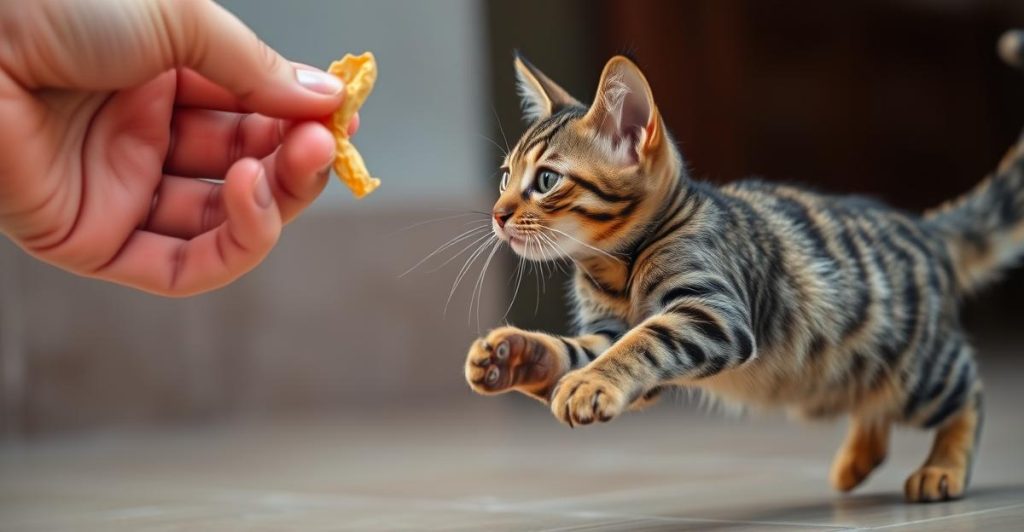
- Hold a treat just above your cat’s head.
- Move the treat backward; the cat’s natural response is to sit to keep its eyes on the prize.
- As soon as the rear touches the floor, click (if using a clicker) and reward.
- Repeat the word “Sit” as you guide the motion, then gradually phase out the treat lure.
2. The “High Five”
High fives are crowd‑pleasers and tap into a cat’s natural paw‑raising instinct when they’re curious.
- Start with a treat in your hand, palm up.
- Encourage your cat to tap your palm with its paw—most will do this instinctively.
- When the paw makes contact, click and reward.
- Add the cue “High five” and practice until the cat lifts its paw on command.
3. The “Come When Called”
Recall training is a safety skill and a fun game. Use a distinct word or phrase, like “Here, kitty!”
- Begin in a room with a short distance between you and the cat.
- Call the cat’s name followed by the cue, then immediately offer a treat when they approach.
- Gradually increase the distance and add mild distractions, always rewarding success.
These basics create a positive feedback loop, making your cat eager to learn more.
Using Clicker and Positive Reinforcement
While treats alone can be effective, a clicker provides a precise, consistent marker that tells your cat exactly which behavior earned the reward. Here’s how to integrate clicker training without overwhelming your feline friend.
- Charge the clicker: Click and immediately give a treat several times so your cat associates the sound with a reward.
- Mark the exact moment: Click the instant the desired behavior occurs, then follow with a treat.
- Fade the clicker: Once the trick is solid, you can reduce reliance on the clicker and use verbal praise instead.
Positive reinforcement goes beyond treats. Soft verbal praise (“Good job!”) and a gentle pet can reinforce the same behavior, especially for cats who value affection over food.
Advancing to Fun Games and Creative Tricks
After mastering the basics, you can explore a variety of entertaining tricks that keep your cat mentally sharp and physically active.
Spin
Spinning taps into a cat’s love of chasing moving objects.
- Hold a treat near your cat’s nose, then move it in a small circle.
- When the cat follows the motion and completes a full turn, click and reward.
- Introduce the cue “Spin” once the motion is consistent.
Fetch
Believe it or not, many cats love to retrieve small toys.
- Choose a lightweight, cat‑safe toy (e.g., a soft ball).
- Throw the toy a short distance; when the cat picks it up, encourage them to bring it back.
- Reward the return with a treat and praise.
- Gradually increase the distance as confidence builds.
Target Touch
Teaching a cat to touch a specific object, like a wand or a sticky note, opens the door to more complex tricks.
- Place a target (e.g., a small sticky pad) on the floor.
- When the cat’s paw or nose contacts the target, click and reward.
- Use the target to guide the cat onto a mat, into a carrier, or onto a specific spot.
Keeping Training Fun and Safe
Training should always be a joyous experience for both parties. Here are some best‑practice tips to ensure sessions remain safe, stress‑free, and enjoyable.
- Watch body language: Signs of overstimulation—flattened ears, twitching tail, or a sudden freeze—mean it’s time to pause.
- End on a high note: Finish each session with a successful trick and a generous reward, leaving your cat eager for the next round.
- Mix in play: Alternate training with free‑play time using favorite toys to keep energy levels balanced.
- Stay patient: Some cats learn quickly, while others take a few tries. Consistency and patience are the true keys to success.
Comparison of Indoor vs. Outdoor Play Activities
| Aspect | Indoor Play | Outdoor Play |
|---|---|---|
| Safety | Controlled environment, no traffic or predators. | Potential exposure to hazards (cars, other animals). |
| Stimulus Variety | Limited to toys, furniture, and human interaction. | Rich sensory input: scents, sounds, natural terrain. |
| Training Integration | Easier to use clicker, treats, and structured sessions. | Can incorporate natural hunting behaviors into tricks. |
| Weather Dependence | Unaffected by rain, heat, or cold. | Requires weather‑appropriate planning. |
| Space Requirements | Can be adapted to small apartments with vertical climbing. | More room for running, jumping, and exploring. |
Putting It All Together: A Sample Weekly Training Plan
Consistency is the secret ingredient that turns a series of tricks into a habit. Below is a flexible weekly schedule that balances training, play, and relaxation.
- Monday: 5‑minute “Sit” and “High Five” session after breakfast.
- Tuesday: 10‑minute interactive play with a feather wand, followed by a brief “Come” recall practice.
- Wednesday: Rest day – focus on grooming and gentle petting.
- Thursday: Introduce “Spin” using a treat lure; keep the session light.
- Friday: Outdoor exploration (if safe) combined with “Target Touch” on a portable mat.
- Saturday: “Fetch” practice in a hallway or safe garden area.
- Sunday: Review favorite tricks, give extra cuddles, and enjoy a relaxed bonding session.
Adjust the plan based on your cat’s energy level and preferences. The goal is to make each day feel rewarding, not regimented.
FAQ
How long does it usually take for a cat to learn a new trick?
Learning speed varies by personality and motivation. Some cats pick up a simple “Sit” within a few sessions, while more complex tricks like “Spin” may need a week or two of consistent practice. Patience and short, frequent sessions accelerate progress.
Can I use food treats for cats with weight concerns?
Yes—opt for low‑calorie, bite‑size treats and balance them with regular meals. You can also use non‑food rewards like a quick play burst or gentle petting to keep training enjoyable without extra calories.
Is clicker training necessary for cats?
Clicker training is a helpful tool but not mandatory. Verbal cues and consistent praise work well for many cats. If you choose a clicker, ensure you “charge” it first by pairing the click sound with a treat.
What should I do if my cat seems disinterested during a session?
Stop the session immediately and give your cat a break. Try again later when they’re more relaxed or after a meal. Switching to a different reward (toy instead of food) may re‑engage their interest.
Disclaimer: This article is intended for informational and entertainment purposes only. It does not replace professional veterinary advice. Always consult a qualified vet for your cat's health and dietary needs.